<?xml version="1.0" encoding="UTF-8"?>
<rss version="2.0"
	xmlns:content="http://purl.org/rss/1.0/modules/content/"
	xmlns:wfw="http://wellformedweb.org/CommentAPI/"
	xmlns:dc="http://purl.org/dc/elements/1.1/"
	xmlns:atom="http://www.w3.org/2005/Atom"
	xmlns:sy="http://purl.org/rss/1.0/modules/syndication/"
	>

<channel>
	<title>Bioregional Congress</title>
	<atom:link href="http://biocongress.org/feed/" rel="self" type="application/rss+xml" />
	<link>http://biocongress.org</link>
	<description>Nurturing a deep sense of place</description>
	<pubDate>Mon, 28 Jun 2010 19:10:49 +0000</pubDate>
	<generator>http://wordpress.org/?v=2.7.1</generator>
	<language>en</language>
	<sy:updatePeriod>hourly</sy:updatePeriod>
	<sy:updateFrequency>1</sy:updateFrequency>
			<item>
		<title>Some Thoughts on Earth-Based Ritual, Other Cultures and Bioregionalism</title>
		<link>http://biocongress.org/2009/11/some-thoughts-on-earth-based-ritual-other-cultures-and-bioregionalism/</link>
		<comments>http://biocongress.org/2009/11/some-thoughts-on-earth-based-ritual-other-cultures-and-bioregionalism/#comments</comments>
		<pubDate>Tue, 03 Nov 2009 22:36:10 +0000</pubDate>
		<dc:creator>carynmg</dc:creator>
		
		<category><![CDATA[Uncategorized]]></category>

		<guid isPermaLink="false">http://biocongress.org/?p=1498</guid>
		<description><![CDATA[Hi everyone &#8212; we&#8217;re having a very vibrant discussion on the bioregional listserv, and I wanted to share with us a recent post by Alberto Ruz on this important topic:
Hi everyone:
Being a sweat lodge runner since 1979 or 1980, a privilege and responsibility passed to me by Melvim Chiloquim, elder and sweat lodge runner from [...]]]></description>
			<content:encoded><![CDATA[<p>Hi everyone &#8212; we&#8217;re having a very vibrant discussion on the bioregional listserv, and I wanted to share with us a recent post by Alberto Ruz on this important topic:</p>
<p>Hi everyone:</p>
<p>Being a sweat lodge runner since 1979 or 1980, a privilege and responsibility passed to me by Melvim Chiloquim, elder and sweat lodge runner from the Klammath nation, and a peace pipe carrier, a privilege and responsibility passed to me in 1988 by a Council of elder women from many different traditions at the sacred Mayan center of Chichen Itza, being myself a mestizo man with an heritage of mixed French, Afro-Cuban, Mexican, Mayan, Spanish and Dutch blood lineages, I reclaim the right to learn in respect from all the traditions from these and other unknown ancestors, and I reclaim too the right to mix in respect the prayers, ways, songs, dances, medicines, stories, myths, prophecies, ceremonies, from all those and other cultures.</p>
<p>As an earthman and as a planetary human being, I reclaim my rights to inherit the traditions of all the cultures from the Earth, from the past, present and future, and to continue serving in all respect and humbleness the Mother, humanity, all my relations, for the purpose of the betterment of all living beings.</p>
<p>The process of civilization is the result of thousands of years of cultural, ethnic, commercial, military, artistic and blood exchanges among people, each one contributing to the global or planetary civilization we live in today. There are probably less than a 0.01 % of all human beings at this time of history in the planet who could claim not to have had, for centuries or millennia, absolutely any exchange with other people, or have been influenced by the contact with other cultures. But if they claim for any kind of “pureness,” it would be because they would have already been contacted by someone else, and therefore, lost their purity just by that simple act to be claiming for anything only “theirs.”</p>
<p>As bioregionalists  we are committing to the place where we live, but probably no one of us can trace their belonging to that specific bioregion for more than three, four of five generations. Especially in the Northern hemisphere. We all came from somewhere else, and we have a history of past mixed marriages in our lineage, that probably are unable to trace down after two or three generations.</p>
<p>First nation people are also the result of the mixture of different people and different cultures, through centuries of mixed marriages, through wars, through colonization, through forced or voluntary immigrations, and therefore, today, probably noone, or maybe just a 0.001 % (if much) could claim not to have had ever any contact with any other culture.</p>
<p>As planetary beings today, we can sit and meditate in respect as the oriental people did for millennia. We can celebrate in respect religious fests from Christian, Jewish, Muslim, African, Indigenous or pagan traditions, use digeredoos from aboriginal people, dress with feathers and clothes from all the cultures on Earth, dance circular peace dances from the four directions, pray with native, Yoruba, Asian or Celtic, drums and blow the conch shells coming from the Tibetan, Mayan or Aztec traditions.</p>
<p>The mixture of human cultures is the sign of richness, a richness that is reflected in Nature, especially in places where beings from the plant, animal, mineral world coexist, and take from each other with more abundance. Monocultures and desertification are signs of poorness. And people and cultures that did not mixed for centuries with others, declined and ended up disappearing.</p>
<p>The importance to preserve the specific elements from each culture, or from species in danger of extinction, has to do with the possibility that those elements do not get lost and our planet becomes each time poorer and poorer. On the contrary, the importance of preserving is to allow that those elements become part of all of us, enriching our lives, and creating a true planetary culture of peace, instead of a global supermarket with a large selection of merchandises.</p>
<p>The unfortunate decease from those people in a sweat lodge has probably to do with the process of global mercantilization and has nothing to do with the respectful appropriation from elements of one or another tradition. And that yes, has to be closely observed. When spirituality, any form of spirituality becomes merchandise, then, yes, we can say that its essential purpose has been distorted. But that can also be considered true for all religious practices. It is not only the problem of adopting elements from Native American ceremonies. It is true for the process of turning ANY element of any spiritual practice (or any teachings or cultural traits) into merchandise.</p>
<p>Should we stop doing Christian ceremonies, as they all come from the Palestinian Semitic cultures from the Middle East? Should we stop talking English, if we come from Cherokee, Lakota or Apache ancestry? Should we stop celebrating Independence Day, Christmas, Carnivals, Thanksgiving, New Year´s Eve, festivals who are the result of many rituals that take their inspiration from other previous more ancient traditions? Should we stop dancing in circles around the fire and singing chants from all proveniences?</p>
<p>As far as I know, people have died in sweat lodges here in Mexico, in Spain, in Bolivia, and maybe in many other places as well. We do not have a record of how many Native people died in sweat lodges through the centuries that this particular ceremony has been practiced. Others died in their vision quests. Or at Sundance ceremonies. People die going to Mecca, people die in catholic pilgrimages, people die in mosques, Tibetan temples, Hindi temples, people die at Candomble, Umbanda, Santeria, voddoo or any sort of Afroamerican rituals, people die climbing or falling from the temples of the Mayan cities…. People die doing yoga and stopping their respiration. People die. AHO!!!</p>
<p>I wish we could have other issues more pressing to focus our time, visions, energies, and purposes. Let’s not buy into the stories the global media wants us to spend our lives. Let’s use our lives to further bioregionalism, yes, but not fundamentalism from any sort. Bioregions are organs, members, bones, blood, tissues from Gaia, Tonantzin, Pachamama. We are born by accident in one bioregion, but we are ALL Earthians, Earth People, Planetary Beings, children from the same Mother. Let’s never forget it please.</p>
<p>My love to you and to all our relations!</p>
<p>Coyote Alberto</p>
]]></content:encoded>
			<wfw:commentRss>http://biocongress.org/2009/11/some-thoughts-on-earth-based-ritual-other-cultures-and-bioregionalism/feed/</wfw:commentRss>
		</item>
		<item>
		<title>Back from the Bioregional Congress</title>
		<link>http://biocongress.org/2009/10/back-from-the-bioregional-congress/</link>
		<comments>http://biocongress.org/2009/10/back-from-the-bioregional-congress/#comments</comments>
		<pubDate>Thu, 15 Oct 2009 20:28:07 +0000</pubDate>
		<dc:creator>carynmg</dc:creator>
		
		<category><![CDATA[Uncategorized]]></category>

		<guid isPermaLink="false">http://biocongress.org/?p=1444</guid>
		<description><![CDATA[have just returned from the Tenth Continental Bioregional Congress at The Farm in Summertown, TN.

The Farm is an intentional living community which began in 1971 as an experiment in communal living when over 300 hippies, members of Stephen Gaskin&#8217;s Monday Night classes in San Francisco, formed a caravan and traveled across the country to settle [...]]]></description>
			<content:encoded><![CDATA[<p>have just returned from the <a href="../" target="_blank">Tenth Continental Bioregional Congress</a> at <a href="http://www.thefarm.org/" target="_blank">The Farm</a> in Summertown, TN.</p>
<div class="image_block"><img class="alignleft" src="http://newsociety.com/blogs/media/blogs/nspblog/farm1.jpg" alt="" width="216" height="162" /></div>
<p>The Farm is an intentional living community which began in 1971 as an experiment in communal living when over 300 hippies, members of Stephen Gaskin&#8217;s Monday Night classes in San Francisco, formed a caravan and traveled across the country to settle in Southern Tennessee. You can read a fascinating history of The Farm <a href="http://www.thefarm.org/lifestyle/albertbates/akbp4.html" target="_blank">here</a>.</p>
<div class="image_block"><img class="alignright" src="http://newsociety.com/blogs/media/blogs/nspblog/farm2.jpg" alt="" width="216" height="162" /></div>
<p>The Farm today is home to such organizations as the <a href="http://www.thefarm.org/etc/index.html" target="_blank">Ecovillage Training Center</a>, <a href="http://www.gaiauniversity.org/english/" target="_blank">Gaia University</a> and <a href="http://www.plenty.org/" target="_blank">Plenty International</a>. It was a natural fit to locate the <a href="../" target="_blank">Tenth Continental Bioregional Congress</a> there, since the Farm shares myriad goals and values with bioregionalism.</p>
<div class="image_block"><img class="alignleft" src="http://newsociety.com/blogs/media/blogs/nspblog/etc.jpg" alt="" width="216" height="162" /></div>
<p>New Society Publishers&#8217; roots are deep in the Bioregional Movement, and this was an exciting opportunity to meet old friends and new. I was especially thrilled to connect with a couple of our authors there. Albert Bates is the author of <a href="http://www.newsociety.com/bookid/3927" target="_blank"><em>The Post-Petroleum Survival Guide and Cookbook</em></a> and the director of the Ecovillage Training Center at the Farm, where he has lived since 1972. Albert has a formidable grasp of all things renewable and sustainable, and the distinction of having one of the friendliest smiles it has ever been my pleasure to encounter. Lately he has been focusing on biochar - watch this space next week for his article on using biochar in carbon farming which was recently published in Southern Tennessee&#8217;s <em>Green Living Journal</em>.</p>
<div class="image_block"><img class="alignright" src="http://newsociety.com/blogs/media/blogs/nspblog/albert.jpg" alt="" width="144" height="192" /></div>
<p>I was also very excited to finally meet Stephanie Mills in person - Stephanie wrote <a href="http://www.newsociety.com/bookid/4007" target="_blank"><em>Whatever Happened to Ecology?</em></a> and <a href="http://www.newsociety.com/bookid/4008" target="_blank"><em>Turning Away from Technology</em></a>, and is also the author of an upcoming biography of Bob Swann which we will be publishing in our Spring season. Stephanie was an incredible pleasure to spend time with - she is one of those people that feels like an old friend even though you&#8217;ve only just met. She recently received an honorary PhD from her Alma Mater in recognition of her lifetime body of work in the service of the environment and bioregionalism - exciting news!</p>
<div class="image_block"><img class="alignleft" src="http://newsociety.com/blogs/media/blogs/nspblog/stephanie.jpg" alt="" width="216" height="162" /></div>
<p>The Congress itself was a cauldron of inspiration and ideas - people talking about permaculture, renewable energy, carbon farming, square foot gardening, foraging, wild farming, education, transportation, living in community, living in place, political revolution - a rich and vibrant tapestry of knowledge against a backdrop of song and celebration.</p>
<p>Interested? Bioregional events are regularly organized at the local and regional level. Check out the <a href="../outreach/" target="_blank">Congress Outreach Page</a> and <a href="../links/" target="_blank">Links Page</a> for ideas about contacting like-minded individuals or creating events in your area.</p>
<p>&#8211; Heather Nicholas, reprinted from <a href="http://newsociety.com/blogs/index.php/2009/10/14/back-from-the-bioregional-congress-at-th">New Society Publishers blog</a></p>
]]></content:encoded>
			<wfw:commentRss>http://biocongress.org/2009/10/back-from-the-bioregional-congress/feed/</wfw:commentRss>
		</item>
		<item>
		<title>CBC 10: A Love Letter</title>
		<link>http://biocongress.org/2009/10/cbc-10-a-love-letter/</link>
		<comments>http://biocongress.org/2009/10/cbc-10-a-love-letter/#comments</comments>
		<pubDate>Thu, 15 Oct 2009 16:25:28 +0000</pubDate>
		<dc:creator>carynmg</dc:creator>
		
		<category><![CDATA[Uncategorized]]></category>

		<guid isPermaLink="false">http://biocongress.org/?p=1413</guid>
		<description><![CDATA[

Hello everyone,
Getting set up in coffee shops to do my normal Goddard and workshops and readings and other arranging work, I can barely imagine what to say to friends about where I’ve been except, “in a parallel universe.” The congress itself is something out of our mainstream American, or even alternative American construct of time [...]]]></description>
			<content:encoded><![CDATA[<div class="entry">
<div class="snap_preview">
<p>Hello everyone,<img class="alignright size-medium wp-image-237" title="IMG_5021" src="http://carynmirriamgoldberg.files.wordpress.com/2009/10/img_5021.jpg?w=274&amp;h=205" alt="IMG_5021" width="274" height="205" /></p>
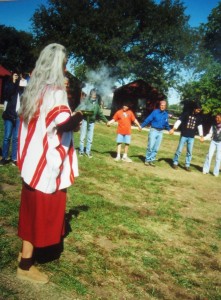
<p>Getting set up in coffee shops to do my normal Goddard and workshops and readings and other arranging work, I can barely imagine what to say to friends about where I’ve been except, “in a parallel universe.” <a href="http://www.bioregional-congress.org/">The congress</a> itself is something out of o<img class="alignleft size-medium wp-image-218" title="IMG_6127" src="http://carynmirriamgoldberg.files.wordpress.com/2009/10/img_6127.jpg?w=206&amp;h=154" alt="IMG_6127" width="206" height="154" />ur mainstream American, or even alternative American construct of time and space. What happened there? I’m not sure although I have some hope that telling you about it will help me know more. Where were we? In some place constant and occasional, ancient and ahead of its time, ceremonial and ordinary, Tennessee and beyond Tennessee. In many ways, the road trip to the congress — all 10 hours of driving plus numerous stops — meant t<img class="alignright size-medium wp-image-229" title="IMG_6182" src="http://carynmirriamgoldberg.files.wordpress.com/2009/10/img_6182.jpg?w=352&amp;h=261" alt="IMG_6182" width="352" height="261" />unneling into the world in the center of the earth, and now we’re out again, back to the surface, and I have to say I’m just a little heartbroken to be apart from the congress and all of you who were there (as well as all of you who have been there and simply must be there next time and haven’t yet been there but will be there in the future).</p>
<p>There were all the normal congress rhythms and patterns: the plenaries that delighted some and make others want to jump from their skins; the workshops some loved and found the highlight of their time and<img class="alignright size-medium wp-image-219" title="IMG_6135" src="http://carynmirriamgoldberg.files.wordpress.com/2009/10/img_6135.jpg?w=286&amp;h=212" alt="IMG_6135" width="286" height="212" /> others found took us away from our time together; the dancing and singing; the food, which was tasty, but jeez, I seriously missed butter; the long talks heart to heart; the smiles across the circles; the sitting<br />
together, knee to knee, to resolve conflicts and speak from the soul, dropping all defenses; the new friends who felt like old family; the old friends who felt like twin or triple souls; the weather with its too-much rain at times and too-seldom sunshine. Having now been to eight of the ten congresses, I kept more keenly attuned to the patterns — the way no one knows what we’re doing so much at first, and how it takes<br />
several times to really arrive at congress together; the anxieties and what-am-I-doing-here moments; the nights it’s hard to sleep because of all the thrill until exhaustion overtakes excitement; and the collective<br />
happiness that settles on us, or grabs us wildly to leap out of our chairs and salsa dance even if we don’t know how.</p>
<p>The congress is my home — I kn<img class="alignleft size-medium wp-image-220" title="IMG_6180" src="http://carynmirriamgoldberg.files.wordpress.com/2009/10/img_6180.jpg?w=262&amp;h=206" alt="IMG_6180" width="262" height="206" />ow it when I’m there, and especially when I’m not anymore. The circle if the room where I live best. Hearing each person speak — whether in the opening circle when we crowded into the big room, lopsided and earnest, saying our names and where we were from, or later in the spiral of the women’s circle, when we spoke about being a woman, living as a woman’s body at this age — shows me who we really are together, and who I am apart: a part of the circle.</p>
<p>The highlights, which our carload of Ken, me, Natalie (17), Gesa (German student living with us now, 16) and Forest (14), named while driving across Missouri, are what you might expect:<img class="alignleft size-medium wp-image-230" title="IMG_6203" src="http://carynmirriamgoldberg.files.wordpress.com/2009/10/img_6203.jpg?w=169&amp;h=226" alt="IMG_6203" width="169" height="226" /></p>
<p>* Latin Night with the amazing dancing and treats, the music and pulse, the beauty and vitality. Arnold, Roberto and Maria doing a salsa dance skit with finesse and beauty until Juan-Tomas tangoed in to steal away Maria.</p>
<p>* The party on the last night with the driving music, and also the gang of fairies who descended upon us <img class="alignright size-medium wp-image-221" title="IMG_6204" src="http://carynmirriamgoldberg.files.wordpress.com/2009/10/img_6204.jpg?w=334&amp;h=249" alt="IMG_6204" width="334" height="249" />from some place two hours away, complete with accordion and tutus, to sing, dance, and slip down the<br />
slide of the playground (part of where the dance was) in full-beards and layers of white tull.</p>
<p>* The men’s and women’s circles: the men’s circle, around the fire, that went on for hours; the women’s circle, inside, with our chairs in a circle, oldest on the e<img class="alignleft size-medium wp-image-222" title="IMG_6220" src="http://carynmirriamgoldberg.files.wordpress.com/2009/10/img_6220.jpg?w=300&amp;h=225" alt="IMG_6220" width="300" height="225" />nd and youngest in the center; both circles<br />
making for the kind of connection that for days afterwards, I kept grabbing the younger women who blew my mind with their articulate hearts and heavy load of passion and possibility, asking them to tell me their<br />
names again, hugging them and telling them to come stay with us sometime when they’re were traveling through Kansas.</p>
<p>* Some of the plenaries when everyone laughed <img class="alignright size-medium wp-image-240" title="IMG_6161" src="http://carynmirriamgoldberg.files.wordpress.com/2009/10/img_6161.jpg?w=220&amp;h=165" alt="IMG_6161" width="220" height="165" />together, when we crossed over to some common and complex understanding as one, when barriers dissolved and we saw ourselves as being in congress together continually, this meeting a continuation of one that began in ‘84 and will never end, I hope.</p>
<p>* A circle of those of us who served on the coordinating council — the congress between the congresses — for the last four years, early evening, our chairs and bodies as close as possible, tears and joy, pride and release, and when we stood up, holding each other close, and could barely stop kissing each other. Thank you, Bob, Liora, Mary, Richard, Ken, Laura, Juan-Tomas.<img class="alignright size-medium wp-image-232" title="IMG_6187" src="http://carynmirriamgoldberg.files.wordpress.com/2009/10/img_6187.jpg?w=155&amp;h=206" alt="IMG_6187" width="155" height="206" /></p>
<p>* Late nights in the house we rented with our extended family, speaking English, Spanish, German (although most of us only understood English), and laughing over something that happened or would happen.</p>
<p>* Cultural Sharing night when Natalie sang “Bewitched” and — what was his name? — played the most amazing finger-piano-type instruments and sang hauntingly piercing tunes — and then Alberto presented a dazzling — for its scope and depth — slide show on LaCaravana (nomadic guerilla theater troupe that <img class="alignright size-medium wp-image-223" title="IMG_6153" src="http://carynmirriamgoldberg.files.wordpress.com/2009/10/img_6153.jpg?w=268&amp;h=201" alt="IMG_6153" width="268" height="201" />spent 13 years spreading bioregionalism through the arts througout Central and South America).</p>
<p>* The close moments with new and old loved ones — I put my hand on so many people’s chests, it seemed, to feel their hearts — in the rain or by the fire, in the midst of drumming or in the wind that poured through the trees.</p>
<p>* Hanging out often with Stephen Gaskin who kept reappearing because, as he said, he “wanted to soak in the <img class="alignleft size-medium wp-image-224" title="IMG_6190" src="http://carynmirriamgoldberg.files.wordpress.com/2009/10/img_6190.jpg?w=288&amp;h=215" alt="IMG_6190" width="288" height="215" />energy of the Mexicans,” and who kept reminding Laura Kuri and me that we were his Ninja Muses because when he first arrived, looking just a little confused, Laura and I leapt up and hugged him, and stood — one of us on each side of him — during the opening circle, telling him we would protect him as Ninja Muses.</p>
<p>* The moment we arrived, and there was Curtis in apron and big smile. The moment we left, and there was Leonora — incredible Venezuelan singer and activist, coming to the car window to kiss us goodbye in the<br />
still-dark morning light.<img class="alignright size-medium wp-image-225" title="IMG_6168" src="http://carynmirriamgoldberg.files.wordpress.com/2009/10/img_6168.jpg?w=255&amp;h=190" alt="IMG_6168" width="255" height="190" /></p>
<p>* Gary’s healing hands and voice, and how many of us did he work on throughout the congress? I hardly saw him not doing massage, energy healing or prayer for/with someone.</p>
<p>* Bea’s artful presentation about Thomas Berry at the memorial service held one afternoon. David Haenke throwing his head back and belting out the most gorgeous song for Thomas Berry, and soon <img class="alignleft size-full wp-image-226" title="IMG_6192" src="http://carynmirriamgoldberg.files.wordpress.com/2009/10/img_6192.jpg?w=257&amp;h=313" alt="IMG_6192" width="257" height="313" />after, David and Alberto pressing their foreheads together, crying over the loss of this great and enduring spirit, our own dream of the earth.</p>
<p>* Alberto telling the story of how LaCaravana went for 13 years all over South America, and instead of money, they used art because, as Alberto said, sometimes there’s no ATM machine, but there’s always art, and art works as a credit card wherever you go.</p>
<p>* Biko drumming us in parade to begin the arts and education day of the bioregional curriculum session, and at the end, drumming us outside to dance among the trees while Odin drummed alongside him. When the first song was done, and Odin started to walk back to the building, Biko called out, “Where do you think you’re going?” while we watched, laughing. Odin came back, and they played more of the most astonishing drumming, grabbing our heart beats and making us dance and pulse with life.<img class="alignright size-medium wp-image-227" title="IMG_6139" src="http://carynmirriamgoldberg.files.wordpress.com/2009/10/img_6139.jpg?w=268&amp;h=233" alt="IMG_6139" width="268" height="233" /></p>
<p>* Walking back to the house one afternoon, the whitish horse watching me as I watched him, the sky still damp and beginning to lighten in orange at its edges, the air delicious.</p>
<p>* Natalie returning from a day walking trails with the girls and young women, telling me that she tried to just take it all in — the breathing earth — and it amazed her to see what she had never seen before. Pat,<br />
the physician’s assistant who helped run the kitchen, making a house call to help Forest, who was sick much of the congress, and then spending ample time helping us find an open pharmacy. Gesa laughing –<br />
her whole face glowing — at the dinner table with Alberto, Laura and Fabio.</p>
<p><img class="alignleft size-medium wp-image-228" title="IMG_6195" src="http://carynmirriamgoldberg.files.wordpress.com/2009/10/img_6195.jpg?w=182&amp;h=225" alt="IMG_6195" width="182" height="225" />* The beautiful site committee and how much they did to make it all work: Greg, Jennifer, Susan, Alayne, Biko, Roberta, and (forgive me, I can’t remember all the names) so many others: THANK YOU!</p>
<p>* Long talks with Patricia, Stephanie, Laura, Fabio, Greg, Stephen, Bea, David in the road, Alberto on the fly, Juan-Tomas as we walked in the dark with Natalie one night, and so many others. I miss and love you — and really everyone — now so much.</p>
<p>Back from the congress, I’m still at the congress. We carry this with us, a kind of birthright, a dance as old as our breath; a body full of contradictions and questions, naive then seas<img class="alignright size-medium wp-image-231" title="IMG_6129" src="http://carynmirriamgoldberg.files.wordpress.com/2009/10/img_6129.jpg?w=162&amp;h=121" alt="IMG_6129" width="162" height="121" />oned understandings, misunderstandings and eventual clearings, old hurts and new healings, and above all, something that transcends how we live in the non-ceremonial world and shows us how to bring the village we make<br />
together — even just a fraction more — into wherever we land. Wherever we are next — in the Northwest or Canada or Ohio or wherever else — I can barely wait.</p>
<p>love to all,<br />
Caryn (<a href="http://www.CarynMirriamGoldberg.com/">Caryn Mirriam-Goldberg</a>, Wakarusa Watershed of <a href="http://www.kawcouncil.org/">Kansas Area Watershed Council</a>)</p>
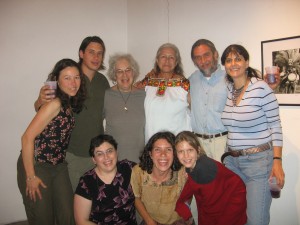
<p><em>Pictures (from top): the congress; the woods at the Farm; </em><em><img class="alignleft size-medium wp-image-233" title="IMG_6171" src="http://carynmirriamgoldberg.files.wordpress.com/2009/10/img_6171.jpg?w=183&amp;h=247" alt="IMG_6171" width="183" height="247" /></em><em>Juan-Tomas, Bob, Stephanie, Andy, Albert; Natalie and Nyela (Sadie’s baby); Laura and Helen (from Mexico); Natalie as cat; the fairies arrive on All Species Night; more All Species (note the porcupine); Bea and me; Gesa; Mark, Richard and the bioregional quilt (started in ‘84, quilted by the men); Fabio and Laura with Stephen Gaskin; Ken, Curtis and others; David and Alberto; Leonor from Venezuela; Stephanie and me; the welcome tent; Gary working on Alberto.</em></div>
</div>
]]></content:encoded>
			<wfw:commentRss>http://biocongress.org/2009/10/cbc-10-a-love-letter/feed/</wfw:commentRss>
		</item>
		<item>
		<title>Pathways towards energy interdependence</title>
		<link>http://biocongress.org/2009/08/pathways-towards-energy-interdependence/</link>
		<comments>http://biocongress.org/2009/08/pathways-towards-energy-interdependence/#comments</comments>
		<pubDate>Thu, 13 Aug 2009 22:48:48 +0000</pubDate>
		<dc:creator>Greg</dc:creator>
		
		<category><![CDATA[Uncategorized]]></category>

		<guid isPermaLink="false">http://biocongress.org/?p=1273</guid>
		<description><![CDATA[Pathways towards energy Interdependence.
Published in Summer 09 Green Living Journal

Bioregionalism is the idea that our cultural and political adaptations should fall consciously within the natural boundaries of our home on earth.  Much of the emphasis of bioregionalism has taken the form of community organizing to bring local food to your table and re-ignite indigenous wisdom [...]]]></description>
			<content:encoded><![CDATA[<p style="text-align: center;"><strong>Pathways towards energy Interdependence.</strong></p>
<p>Published in Summer 09 <a href="http://www.holisticecology.org/view_subpage.php?header=4&amp;&amp;page=5">Green Living Journal</a></p>
<p style="text-align: center;"><a href="http://www.holisticecology.org/view_subpage.php?header=4&amp;&amp;page=5"><img class="size-full wp-image-1274 aligncenter" title="green-living-logo" src="http://biocongress.org/wp-content/uploads/2009/08/green-living-logo.jpg" alt="green-living-logo" width="243" height="259" /></a></p>
<p>Bioregionalism is the idea that our cultural and political adaptations should fall consciously within the natural boundaries of our home on earth.  Much of the emphasis of bioregionalism has taken the form of community organizing to bring local food to your table and re-ignite indigenous wisdom that remind of us of our deep sense of place and peace on earth.</p>
<p>Now, as we stare down the barrel of another big economic bubble taking form as &#8220;the green energy economy&#8221; bioregionalism offers us a glimpse of of social, technological and economic development that does not lead to a burst bubble ten years down the road.</p>
<p>Bioregional energy designs call for localized, energy that comes from multiple sources.  This kind of diversity leads to long term resilience.  An example of this would be a county or state that had invested in wind, hydro, biomass, and solar energy sources to power the cities and industries of the region.</p>
<p>However, energy technologies are only half the story.  The other half lies in grassroots, democratic control over the energy sources.  Organizations like Coop power in the North East USA are leading the way in organizational designs that empower citizens of a bioregion with decision making power over their electrical utilities from production to usage.</p>
<p>This is kind of participation relies on informed citizens with a deep interests in their homes.   Participatory, bioregional energy systems can keep our communities strong and our environment vibrant for generations.</p>
<p>The discussion continues:</p>
<p>Citizen groups, energy consultants and activists will be gathering here, in the Cumberland Green bioregion for the Tenth Continental Biroegional Congress to create a ceremonial village to discuss collaborative next steps for bioregional energy, food, water culture and beyond from October 3-11th on The Farm in Summertown Tennessee, placing Lewis County at the Forefront of the conversation that is leading North America and the world towards a greener, healthier tomorrow.</p>
<p>The Bioregional congress is a living example of a participatory, democratic village.<br />
The congress, made up of volunteer delegates from the four corners of the North American Continent, meets in plenary sessions and forms working groups to cover issues brought up by the delegates and their bioregional constituents (including honorary representatives from the plant and animal kingdoms who lack a voice in our current political system).</p>
<p>During before and after these plenary and break out sessions there is open space for workshops coving a wide range of ecological wisdoms, techniques and ideas to help cross pollinate best practices between bioregions.</p>
<p>The intention of the Bioregional Congress is to create a forum where all voices can be heard, and model the kind of resilient, participatory society we would like to create.  This Congress will model sustainability by using local food, sustainable energy and off setting its carbon footprint, and that of its delegates by planting trees are participating in a carbon offset plan designed during the 1st ever Carbon Farming Course set to take place from August 25th- September 16th.</p>
<p>The human energy being gathered and unleashed can be seen as a beautiful metaphor for the next steps needed to turn the new green bubble into something substantial: the shift from a culture of passive acceptance  to a culture of participation.</p>
<p>If you are interested in participating in the discussion and ceremonial village during the Bioregional Congress please email cbcx@thefarm.org or visit bioregional-congress for more options.</p>
]]></content:encoded>
			<wfw:commentRss>http://biocongress.org/2009/08/pathways-towards-energy-interdependence/feed/</wfw:commentRss>
		</item>
		<item>
		<title>Bioregionalism and Interdependence</title>
		<link>http://biocongress.org/2009/08/bioregionalism-and-interdependence/</link>
		<comments>http://biocongress.org/2009/08/bioregionalism-and-interdependence/#comments</comments>
		<pubDate>Tue, 11 Aug 2009 22:34:55 +0000</pubDate>
		<dc:creator>Greg</dc:creator>
		
		<category><![CDATA[BIoregional Congress]]></category>

		<category><![CDATA[CBCX]]></category>

		<category><![CDATA[bioregion]]></category>

		<category><![CDATA[bioregional]]></category>

		<category><![CDATA[Interdependent Radio]]></category>

		<guid isPermaLink="false">http://biocongress.org/?p=1267</guid>
		<description><![CDATA[A podcast with Gregory Landua, Site Comittee Coordinator for the upcoming Bioregional Congress, and the Interdependent Radio Project.


]]></description>
			<content:encoded><![CDATA[<p>A podcast with Gregory Landua, Site Comittee Coordinator for the upcoming <a href="http://biocongress.org/2009congress/">Bioregional Congress</a>, and the <a href="http://www.interdependentproject.org/greencarpet.htm">Interdependent Radio Project.</a></p>
<p><img style="visibility: hidden; width: 0px; height: 0px;" src="http://counters.gigya.com/wildfire/IMP/CXNID=2000002.0NXC/bT*xJmx*PTEyNTAwMjUyMDI*MzUmcHQ9MTI1MDAyOTkyNTk4NCZwPTI3MDgxJmQ9d2lkZ2V*UGxheWVyTWluaSZnPTImbz**NmZlY2RkZGE2ZTU*ZDUzODFjYmQzZWNkNzhjZjVkMSZvZj*w.gif" border="0" alt="" width="0" height="0" /><img class="alignright size-medium wp-image-1269" title="picture-1" src="http://biocongress.org/wp-content/uploads/2009/08/picture-1-258x300.png" alt="picture-1" width="258" height="300" /><br />
<object width="262" height="83" data="http://cache.reverbnation.com/widgets/swf/13/widgetPlayerMini.swf?emailPlaylist=playlist_632506&amp;backgroundcolor=EEEEEE&amp;font_color=000000&amp;posted_by=artist_377117&amp;shuffle=&amp;autoPlay=false" type="application/x-shockwave-flash"><param name="src" value="http://cache.reverbnation.com/widgets/swf/13/widgetPlayerMini.swf?emailPlaylist=playlist_632506&amp;backgroundcolor=EEEEEE&amp;font_color=000000&amp;posted_by=artist_377117&amp;shuffle=&amp;autoPlay=false" /></object><br />
<a href="http://www.reverbnation.com/c./a4/13/377117/Artist/0/User/link"><img src="http://cache.reverbnation.com/widgets/content/13/footer.png" border="0" alt="Interdependent%20Project%20Radio" width="262" height="12" /></a><br />
<img style="visibility: hidden; width: 0px; height: 0px;" src="http://www.reverbnation.com/widgets/trk/13/playlist_632506/artist_377117/t.gif" border="0" alt="" width="0" height="0" /><a href="http://www.quantcast.com/p-05---xoNhTXVc" target="_blank"><img style="display: none" src="http://pixel.quantserve.com/pixel/p-05---xoNhTXVc.gif" border="0" alt="Quantcast" width="1" height="1" /></a></p>
]]></content:encoded>
			<wfw:commentRss>http://biocongress.org/2009/08/bioregionalism-and-interdependence/feed/</wfw:commentRss>
		</item>
		<item>
		<title>Bioregional &#34;Biocurriculum&#34;!</title>
		<link>http://biocongress.org/2009/04/bioregional-biocurriculum/</link>
		<comments>http://biocongress.org/2009/04/bioregional-biocurriculum/#comments</comments>
		<pubDate>Tue, 07 Apr 2009 03:03:00 +0000</pubDate>
		<dc:creator>nemawashi</dc:creator>
		
		<category><![CDATA[Biocurriculum]]></category>

		<category><![CDATA[Biocurriculum blog]]></category>

		<guid isPermaLink="false">http://bioregionalcongress.wordpress.com/2009/04/07/bioregional-biocurriculum/</guid>
		<description><![CDATA[Hello bioregional activist, organizer, artist, elder and/or enthusiast,
 At the last Continental Bioregional Congress at Earthaven Ecovillege in 2005, the CBC Coordinating Council was charged by the congress to begin working on a bioregional curriculum, which could be piloted (at least in part) at the next congress. Participants at the last congress felt it  [...]]]></description>
			<content:encoded><![CDATA[<p><span style="font-family:arial;">Hello bioregional activist, organizer, artist, elder and/or enthusiast,</span></p>
<p><span style="font-family:arial;"> At the last Continental Bioregional Congress at Earthaven Ecovillege in 2005, the CBC Coordinating Council was charged by the congress to begin working on a bioregional curriculum, which could be piloted (at least in part) at the next congress. Participants at the last congress felt it </span><br /><span style="font-family:arial;"> was essential to develop bioregional tools that could transit what we&#8217;ve learned and what we have to offer for a vividly-changing world. The need has only grown in the last four years.</span></p>
<p><span style="font-family:arial;"> VISION: Our vision was to develop something akin to the permaculture certification &#8212; perhaps an 80-100 hour curriculum comprehensively embracing bioregional theory and practice, and set up in such a way that local communities could infuse the curriculum with local wisdom and traditions.</span></p>
<p><span style="font-family:arial;"> PROCESS: Our process was to first develop this in collaboration with the Coordinating Council, and representations from the next congress&#8217; site committee, and then widen the circle to get input from people like you!</p>
<p>After May 15, 2009, we will share this blog page with the larger </span><span style="font-family:arial;">bioregional listservs, websites and social networking sites to help </span><span style="font-family:arial;">raise energy for the next congress and for the curriculum.</span></p>
<p><span style="font-family:arial;"> WE SEEK YOUR INPUT: We ask you to visit </span><a href="http://Biocurriculum.blogspot.com">http://Biocurriculum.blogspot.com</a><span style="font-family:arial;">, where you can see the goals for the curriculum, the curriculum structure, a draft for piloting a 16-hour introduction to the curriculum at the next congress (Oct. 3-10, 2009 at The Farm &#8212; <a href="http://www.Bioregional-congress.org">www.Bioregional-congress.org</a>), and questions for expanding this curriculum to an 80-100 hour program in the future. Note that the structure for both the short and longer curricula will be the same&#8211;just more details and place-specific information will be added to the longer version. We know that many of you have vast experience in bioregional, social ecological, environmental and related education, and we humbly ask for your suggestions, clarifying questions, feedback, etc.</span>
<p style="font-family:arial;"> FUTURE DEVELOPMENT: Once the 16 hour curriculum is piloted at the next congress, and while it&#8217;s being piloted, all interested people (including any and many of you, we hope!) can meet to help us further develop the full curriculum, and then the infrastructure to carry it out into the world and seed it widely, including ways it can be widely offered through many organizations, individuals, institutions and communities.</p>
<p style="font-family:arial;"> We seek to create a curriculum that would dovetail with and/or build on some of the work many of you are already doing in bioregional education as well something many of you can integrate into your educational offerings on bioregionalism.</p>
<p style="font-family:arial;"> At the website &#8212; <a href="http://www.Biocurriculum.blogspot.com">www.Biocurriculum.blogspot.</a><a href="http://www.Biocurriculum.blogspot.com">com</a> &#8212; you can leave comments, or you may email any comments to us at this email (Caryn will pass all comments onto the curriculum committee). And if you would rather share your comments by phone, just drop Caryn a line, and she&#8217;ll call you. Letters are also welcome: 1357 N. 1000 Rd., Lawrence, KS. 66046.</p>
<p>With great love for the beautiful earth,<br />Ken Lassman, Caryn Mirriam-Goldbeg &amp; Jennifer English for the CBC coordinating council and CBC X site committee</p>
]]></content:encoded>
			<wfw:commentRss>http://biocongress.org/2009/04/bioregional-biocurriculum/feed/</wfw:commentRss>
		</item>
		<item>
		<title>Rocket Stoves Rock!</title>
		<link>http://biocongress.org/2009/04/rocket-stoves-rock/</link>
		<comments>http://biocongress.org/2009/04/rocket-stoves-rock/#comments</comments>
		<pubDate>Tue, 07 Apr 2009 02:18:00 +0000</pubDate>
		<dc:creator>nemawashi</dc:creator>
		
		<category><![CDATA[Ianto Evans]]></category>

		<category><![CDATA[mass heater]]></category>

		<category><![CDATA[rocket stove]]></category>

		<guid isPermaLink="false">http://bioregionalcongress.wordpress.com/2009/04/07/rocket-stoves-rock/</guid>
		<description><![CDATA[Permaculturist Paul Wheaton just sent me a link to this new video featuring the extremely fuel-efficient build-it-yourself rocket stove / mass heater.  It offers,  in Paul&#8217;s words, &#8220;A compilation of 12 rocket heaters, 8 video clips of rocket mass heaters, 2 video clips of pocket rockets, 1 picture from the cover of the [...]]]></description>
			<content:encoded><![CDATA[<p><a href="http://ilovecob.com/wp-content/uploads/cobmob_rocket-500x375.jpg"><img style="float:left;cursor:pointer;width:419px;height:314px;margin:0 10px 10px 0;" src="http://ilovecob.com/wp-content/uploads/cobmob_rocket-500x375.jpg" alt="" border="0" /></a><span style="font-family:arial;">Permaculturist</span> <span style="font-family:arial;">Paul Wheaton just sent me a link to this new video featuring the extremely fuel-efficient build-it-yourself <a href="http://en.wikipedia.org/wiki/Rocket_stove">rocket stove</a> / mass heater.  It offers,  in Paul&#8217;s words, &#8220;A compilation of 12 rocket heaters, 8 video clips of rocket mass heaters, 2 video clips of pocket rockets, 1 picture from the cover of the book on rocket mass heaters and one drawing from me making a feeble attempt to explain what these look like. And look! A peek at the author Ianto Evans!&#8221;</p>
<p>You can watch several other rocket stove videos on YouTube <a href="http://www.youtube.com/results?search_type=&amp;search_query=rocket+stoves&amp;aq=f">here</a>.</p>
<p></span><a href="http://ilovecob.com/wp-content/files/rocketbench.jpg"><img style="float:left;cursor:pointer;width:419px;height:182px;margin:0 10px 10px 0;" src="http://ilovecob.com/wp-content/files/rocketbench.jpg" alt="" border="0" /></a><a href="http://lh6.ggpht.com/_3ReOSq1TitE/R1jnvDf56eI/AAAAAAAAADQ/c51kX-adous/s512/RocketDiagram.gif"><img style="cursor:pointer;width:420px;height:429px;" src="http://lh6.ggpht.com/_3ReOSq1TitE/R1jnvDf56eI/AAAAAAAAADQ/c51kX-adous/s512/RocketDiagram.gif" alt="" border="0" /></a></p>
]]></content:encoded>
			<wfw:commentRss>http://biocongress.org/2009/04/rocket-stoves-rock/feed/</wfw:commentRss>
		</item>
		<item>
		<title>Congresses of the past: in photos</title>
		<link>http://biocongress.org/2009/04/congresses-of-the-past-in-photos/</link>
		<comments>http://biocongress.org/2009/04/congresses-of-the-past-in-photos/#comments</comments>
		<pubDate>Sun, 05 Apr 2009 23:27:00 +0000</pubDate>
		<dc:creator>nemawashi</dc:creator>
		
		<category><![CDATA[BIoregional Congress]]></category>

		<category><![CDATA[flickr]]></category>

		<category><![CDATA[photos]]></category>

		<guid isPermaLink="false">http://bioregionalcongress.wordpress.com/2009/04/05/congresses-of-the-past-in-photos/</guid>
		<description><![CDATA[The history of the Congresses has been rich and storied.  Here we can see the amazing myriad of cultural traditions that weave together to form the biorgional conversation.
]]></description>
			<content:encoded><![CDATA[<p>The history of the Congresses has been rich and storied.  Here we can see the amazing myriad of cultural traditions that weave together to form the biorgional conversation.</p>
]]></content:encoded>
			<wfw:commentRss>http://biocongress.org/2009/04/congresses-of-the-past-in-photos/feed/</wfw:commentRss>
		</item>
		<item>
		<title>A Farm for the Future</title>
		<link>http://biocongress.org/2009/03/a-farm-for-the-future/</link>
		<comments>http://biocongress.org/2009/03/a-farm-for-the-future/#comments</comments>
		<pubDate>Wed, 18 Mar 2009 03:34:00 +0000</pubDate>
		<dc:creator>nemawashi</dc:creator>
		
		<category><![CDATA[Food and Farming Transition]]></category>

		<category><![CDATA[permaculture]]></category>

		<category><![CDATA[transition]]></category>

		<guid isPermaLink="false">http://bioregionalcongress.wordpress.com/2009/03/18/a-farm-for-the-future/</guid>
		<description><![CDATA[Wildlife film maker Rebecca Hosking investigates how to transform her family&#8217;s farm in Devon into a low energy farm for the future, and discovers that nature holds the key. With her father close to retirement, Rebecca returns to her family&#8217;s wildlife-friendly farm in Devon, to become the next generation to farm the land.
But last year&#8217;s [...]]]></description>
			<content:encoded><![CDATA[<p><a href="http://www.bbc.co.uk/radio4/womanshour/02/media/rebeccahosking.jpg"><img style="float:left;cursor:pointer;width:265px;height:198px;margin:0 10px 10px 0;" src="http://www.bbc.co.uk/radio4/womanshour/02/media/rebeccahosking.jpg" alt="" border="0" /></a><span style="display:inline;font-family:arial;">Wildlife film maker Rebecca Hosking investigates how to transform her family&#8217;s farm in Devon into a low energy farm for the future, and discovers that nature holds the key. With her father close to retirement, Rebecca returns to her family&#8217;s wildlife-friendly farm in Devon, to become the next generation to farm the land.</p>
<p>But last year&#8217;s high fuel prices were a wake-up call for Rebecca. Realising that all food production in the UK is completely dependent on abundant cheap fossil fuel, particularly oil, she sets out to discover just how secure this </span><span style="display:inline;font-family:arial;">oil supply is. Alarmed by the answers, she explores ways of farming without using fossil fuel. With </span><span style="display:inline;font-family:arial;">the help of pioneering farmers and growers, Rebecca learns that it is actually nature that holds the key to farming in a low-energy future.<br /></span>
<p style="font-family:arial;"><strong><span style="font-weight:normal;">The following from <a href="http://www.treehugger.com/files/2009/03/peak-oil-and-agriculture.php">Tree Hugger</a>:</span><br /></strong></p>
<p style="font-family:arial;"><strong>Film Maker Explores Post-Oil Farming</strong><br />Last week I wrote about a BBC documentary which I hadn&#8217;t seen, but the green scene in the UK was all a flutter over. <a href="http://www.treehugger.com/files/2009/02/farm-for-the-future.php">A Farm for the Future</a> explores nature film maker <a href="http://www.treehugger.com/Rebeacca-Hosking-Farm-for-the-Future.jpg"><img style="float:left;cursor:pointer;width:420px;height:365px;margin:0 10px 10px 0;" src="http://www.treehugger.com/Rebeacca-Hosking-Farm-for-the-Future.jpg" alt="" border="0" /></a>Rebecca Hosking&#8217;s return to her small family farm and her search for a post-fossil fuel agriculture. I&#8217;ve since seen the film, and would recommend it to anyone with an interest in food and farming - come to think of it, I&#8217;d recommend it to anyone who eats. But for those without the time or means to watch it, Rebecca has also written an excellent article in the Daily Mail newspaper about her <a href="http://www.dailymail.co.uk/news/article-1145431/Now-farm-help-teach-world-live-oil-says-woman-banished-plastic-bags-town.html">quest for truly sustainable agriculture</a>.</p>
<p>                              <a name="more"></a>
<p style="font-family:arial;">Rebecca&#8217;s work (who incidentally is also responsible for a plastic bag ban in her home town!) is not just remarkable for the content she is covering - but the venues in which it is being aired too. To have a half-hour documentary devoted to peak oil, agriculture and alternatives like forest gardening and permaculture appear on prime time BBC is a telling sign of the times. But to also have an article in the Daily Mail - hardly the bastion of environmental radicalism - is dynamite. </p>
<p style="font-family:arial;"><a href="http://agratech.files.wordpress.com/2009/02/fossil-fuel-cows.jpg"><img style="float:left;cursor:pointer;width:420px;height:236px;margin:0 10px 10px 0;" src="http://agratech.files.wordpress.com/2009/02/fossil-fuel-cows.jpg" alt="" border="0" /></a>There is no doubt in my mind that Rebecca is opening a lot of eyes to the unsustainability of our present food system. Take this excerpt from Rebecca&#8217;s conversation with <a href="http://patrickwhitefield.co.uk/">permaculture guru Patrick Whitefield</a> [Disclaimer: Patrick is a former teacher and friend of mine]:</p>
<blockquote><p>But it will work only if we have a lot more growers. Some reports estimate it&#8217;s going to take as many as 12 million, although currently we have 11million gardeners. A food-growing system based on natural ecology appeals to my naturalist side. But the farmer&#8217;s daughter in me needed a bit more convincing. Could permaculture feed Britain? I asked Patrick Whitefield, Britain&#8217;s leading expert in permaculture.
<p>&#8216;Good question,&#8217; he said. &#8216;A better question would be, &#8220;Can present methods go on feeding Britain?&#8221; In the long term, it is certain that present methods can&#8217;t because they are so entirely dependent on fossil-fuel energy. So we haven&#8217;t got any choice other than to find something different.&#8217;</p>
<p>The more permaculture people I met, the more hopeful I became that we can find a way out of this mess if we start preparing for peak oil now.</p>
</blockquote>
<p style="font-family:arial;">Along the way, Rebecca also meets Ben and Charlotte Hollins - the brother and sister team who now run the innovative <a href="http://www.treehugger.com/files/2006/07/fordhall_farm_l.php">Fordhall Farm in Shropshire</a> - and talks about their nature-based no-till pasture system; she talks with peak oil experts Richard Heinberg and Colin Campbell; visits Martin Crawford of the <a href="http://www.agroforestry.co.uk/">Agroforestry Research Trust</a> and explores the small holding of Chris and Lynn Dixon - who have pioneered their low input, biodiverse <a href="http://www.konsk.co.uk/">permaculture-based land management techniques</a> in the hills of Wales for years. </p>
<p style="font-family:arial;">For folks like me who have long followed permaculture and other sustainable, but often marginalized, food movements, it&#8217;s really incredible to see voices like this getting a wide and receptive audience. Now we just have to see how many folks are willing to roll up their sleeves, get their hands dirty, and start planting.</p>
]]></content:encoded>
			<wfw:commentRss>http://biocongress.org/2009/03/a-farm-for-the-future/feed/</wfw:commentRss>
		</item>
		<item>
		<title>April 18-19 Transition Training in Bloomington, IN</title>
		<link>http://biocongress.org/2009/03/april-18-19-transition-training-in-bloomington-in/</link>
		<comments>http://biocongress.org/2009/03/april-18-19-transition-training-in-bloomington-in/#comments</comments>
		<pubDate>Wed, 11 Mar 2009 22:08:00 +0000</pubDate>
		<dc:creator>nemawashi</dc:creator>
		
		<category><![CDATA[Indiana]]></category>

		<category><![CDATA[transition]]></category>

		<category><![CDATA[transition towns]]></category>

		<guid isPermaLink="false">http://bioregionalcongress.wordpress.com/2009/03/11/april-18-19-transition-training-in-bloomington-in/</guid>
		<description><![CDATA[Transition Town training answers the question: How can our community respond to the challenges, and opportunities, of Peak Oil and Climate Change?


Four Key Assumptions of the Transition Initiative Process:
 

That      life with dramatically lower energy consumption is inevitable, and that      it’s better to plan for [...]]]></description>
			<content:encoded><![CDATA[<p><a href="http://4.bp.blogspot.com/_euF0oZR1Bek/Sbg3DlIvzGI/AAAAAAAABUk/ILwUdz74Jyc/s1600-h/TransBloomLogo.gif"><img style="cursor:pointer;width:306px;height:131px;" src="http://4.bp.blogspot.com/_euF0oZR1Bek/Sbg3DlIvzGI/AAAAAAAABUk/ILwUdz74Jyc/s200/TransBloomLogo.gif" alt="" border="0" /></a><br /><span style="font-family:arial;font-size:130%;"><span style="font-weight:bold;">Transition</span></span><span style="font-weight:bold;font-family:Arial;font-size:130%;"> Town</span><span style="font-family:arial;font-size:22px;"><span style="font-size:130%;"><span style="font-weight:bold;"> training answers the question: How can our community respond to the challenges, and opportunities, of Peak Oil and Climate Change?</span></span></span>
<p style="font-family:arial;"></p>
<p class="MsoNormal" style="text-align:right;font-family:arial;" align="right">
<p style="font-family:arial;" class="MsoNormal"><b>Four Key Assumptions of the Transition Initiative Process:</b></p>
<p style="font-family:arial;" class="MsoNormal"><b><span style="font-size:11px;"> </span></b></p>
<ul style="margin-top:0;font-family:arial;" type="disc">
<li class="MsoNormal"><span style="font-size:100%;">That      life with dramatically lower energy consumption is inevitable, and that      it’s better to plan for it than be taken by surprise.</span></li>
<li class="MsoNormal"><span style="font-size:100%;">That      our communities presently lack the resilience to enable them to weather      the severe energy shocks that will accompany peak oil.</span></li>
<li class="MsoNormal"><span style="font-size:100%;">That      we have to act collectively, and we have to act now.</span></li>
<li class="MsoNormal"><span style="font-size:100%;">That      by unleashing the collective genius of those around us to creatively and      proactively design our energy future, we can build ways of living that are      more connected, more enriching and that recognize the biological limits of      our planet.</span></li>
</ul>
<p style="font-family:arial;" class="MsoNormal"><span style="font-size:100%;"> </span></p>
<p style="font-family:arial;" class="MsoNormal"><span style="font-size:100%;">Learn from experienced trainers Michael Brownlee and Lynette Marie Hanthorn, certified Transition Trainers and co-founders of the first official Transition Initiative in North America.</span></p>
<p style="font-family:arial;" class="MsoNormal"><span style="font-size:100%;"> </span></p>
<p style="font-family:arial;" class="MsoNormal"><span style="font-size:100%;">Saturday &amp; Sunday, April 18 &amp; 19, 2009</span><span style="font-size:100%;"><br /></span><span style="font-size:100%;"><b><span>City Hall Council Chambers, Bloomington City Hall, Bloomington</span></b></span></p>
<p style="font-family:arial;" class="MsoNormal"><span style="font-size:100%;"><b><span> </span></b></span></p>
<p style="font-family:arial;" class="MsoNormal"><!--[if gte vml 1]&gt;     &lt;![endif]--><!--[if !vml]--><!--[endif]--><span style="font-size:100%;">This workshop fulfills the training requirement for initiating local Transition groups. </span></p>
<p style="font-family:arial;" class="MsoNormal"><span style="font-size:100%;"> </span></p>
<p style="font-family:arial;" class="MsoNormal"><span style="font-size:100%;">Learn now, apply your skills here, take it with you. Be ready to foster Transition wherever you go.</span></p>
<p style="font-family:arial;" class="MsoNormal"><span style="font-size:100%;"> </span></p>
<p style="font-family:arial;" class="MsoNormal"><span style="font-size:100%;"><b><span>Cost $225. Deadline April 6. If extra space is available, late registrations will be $250. Some partial scholarships.</span></b></span></p>
<p style="font-family:arial;" class="MsoNormal"><span style="font-size:100%;"> </span></p>
<p style="font-family:arial;" class="MsoNormal"><span style="font-size:100%;">For registration or information: <a href="mailto:transitiontraining@permacultureactivist.net">transitiontraining@permacultureactivist.net</a> 812-339-0383</span></p>
<p style="font-family:arial;" class="MsoNormal"><span style="font-size:100%;"> </span></p>
<p style="font-family:arial;" class="MsoNormal"><span style="font-size:100%;">Join us for a free viewing of these films at Monroe Co Public Library Auditorium:</span><span style="font-size:8px;"></span></p>
<p style="font-family:arial;" class="MsoNormal"><span style="font-size:8px;"> </span></p>
<p style="font-family:arial;" class="MsoNormal"><b>Tuesday March 24, 7 pm: </b><b>&#8220;A Crude Awakening: The Oil Crash&#8221;<br /><span>Thursday April 9, 7 pm: <span> </span></span>&#8220;The Power of Community: How Cuba Survived Peak Oil&#8221;  <!--[if !supportLineBreakNewLine]-->  <!--[endif]--></b></p>
]]></content:encoded>
			<wfw:commentRss>http://biocongress.org/2009/03/april-18-19-transition-training-in-bloomington-in/feed/</wfw:commentRss>
		</item>
	</channel>
</rss>